How to Read This Page
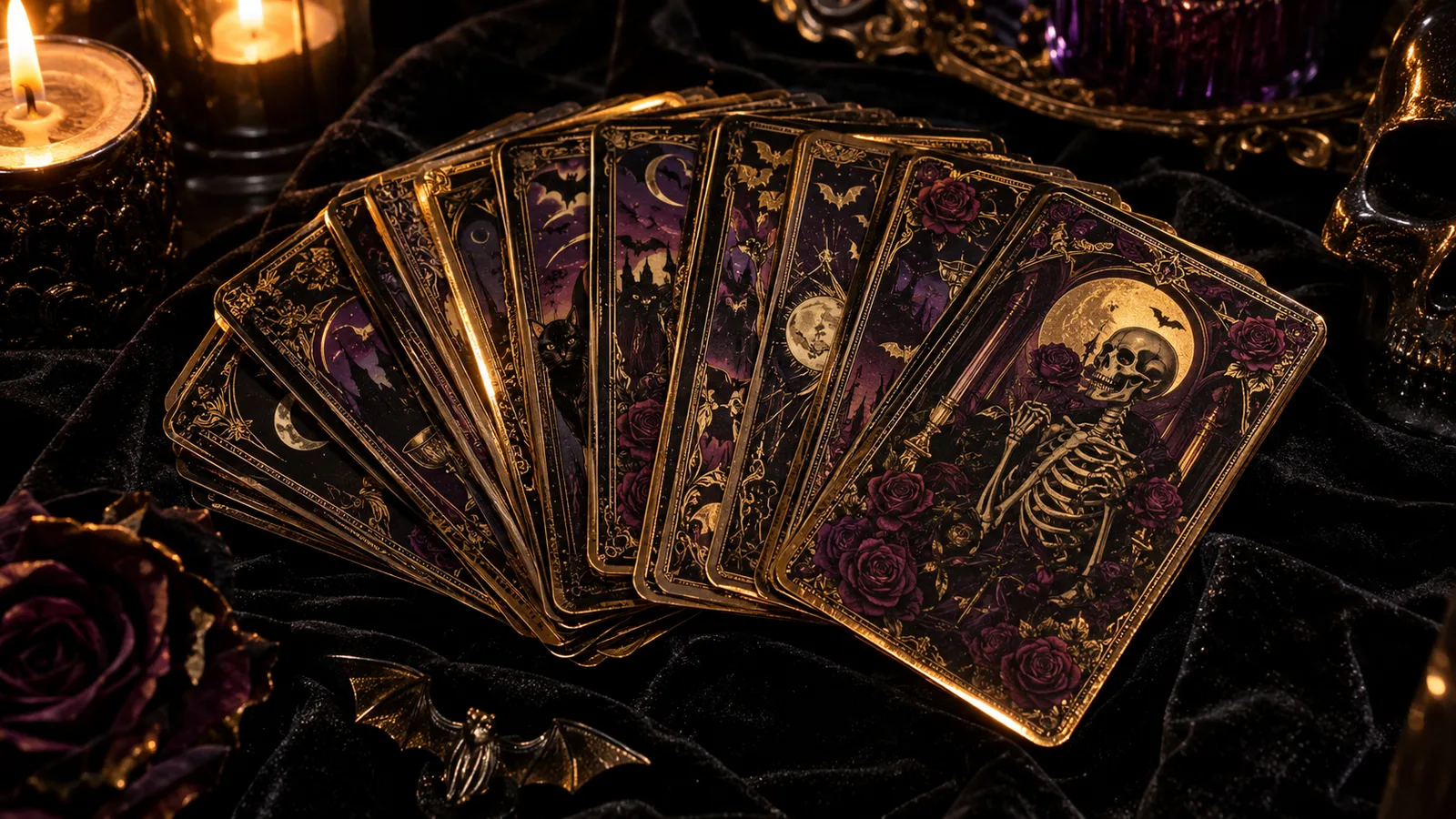
The easiest tarot costume is a frame and a color story. You do not need a perfect replica of a specific deck. Pick the card you want to embody, borrow its palette, and choose one symbol that reads from across a room. A silver crescent, a gold sun, a red rose, or a skeleton hand will do more work than a hundred tiny details.
Cardboard is the best frame material for most people. It is cheap, light, and easy to cut. Prime it with gesso or a coat of matte paint, then add a metallic rim with ribbon or tape. If you want a photo-ready finish, seal it with matte medium so the paint does not crack when you move.
Makeup should follow the card, not fight it. The Moon can be a cool silver eye and a dark lip. The Sun can be gold shimmer and a warm cheek. Death can be a simple white face with dark eye sockets. Keep the makeup comfortable enough to wear for several hours, and bring a small touch-up kit.
Photograph the costume against a plain wall or a dark doorway. Hold the frame slightly away from your face so the light can reach your eyes. If you are in a group, arrange the cards in a spread rather than a line. The photo will read as a tarot card even before anyone asks what you are.
Before and After the Reveal
Before you build, choose the card and write down three words that describe its mood. Use those words to choose the palette, the symbol, and the makeup.
Test the costume in the room where you will wear it. Sit, walk, climb stairs, and hug someone. If the frame blocks your vision or your arms, cut it down before the party.
Bring one small repair kit: safety pins, tape, a spare eyeliner, and a snack. A costume is a performance, and performances go better with backups.
Keep the Reading Grounded
Tarot Reveal keeps the experience lightweight: no account wall, no private birth data form, and no claim that a card replaces professional advice. Treat the reading as a reflective prompt, then bring your own judgment to anything important.
If you compare multiple pages, use the one that matches your intent instead of starting from the broadest keyword every time. A daily card, a random card, a three-card spread, and a card meaning guide each answer a different kind of question.
Keep brief notes if a reading feels useful, then return later and compare it with what actually changed in context.