How to Read This Page
The tarot market is full of decks that look like Halloween but read like a different oracle. Before you buy, ask three questions: does it have 78 cards, does the guidebook map the cards to the major and minor arcana, and can you recognize the cards at a glance? If the answer to any of those is no, treat the deck as art or a party prop rather than your main reading deck.
Card stock matters more than most buyers expect. A glossy deck slides off a velvet table and reflects candlelight. A matte or linen finish is easier to shuffle and photograph. If you plan to read outdoors, a slightly heavier deck handles wind better. If you plan to travel, a smaller deck is easier to carry.
The artwork sets the tone of the reading. A cute cat deck will make The Devil feel like a mischievous friend; a gothic deck will make The Star feel like a distant chapel light. Neither is wrong. Choose the tone you want to sit with for an hour, not just the tone that looks best on Instagram.
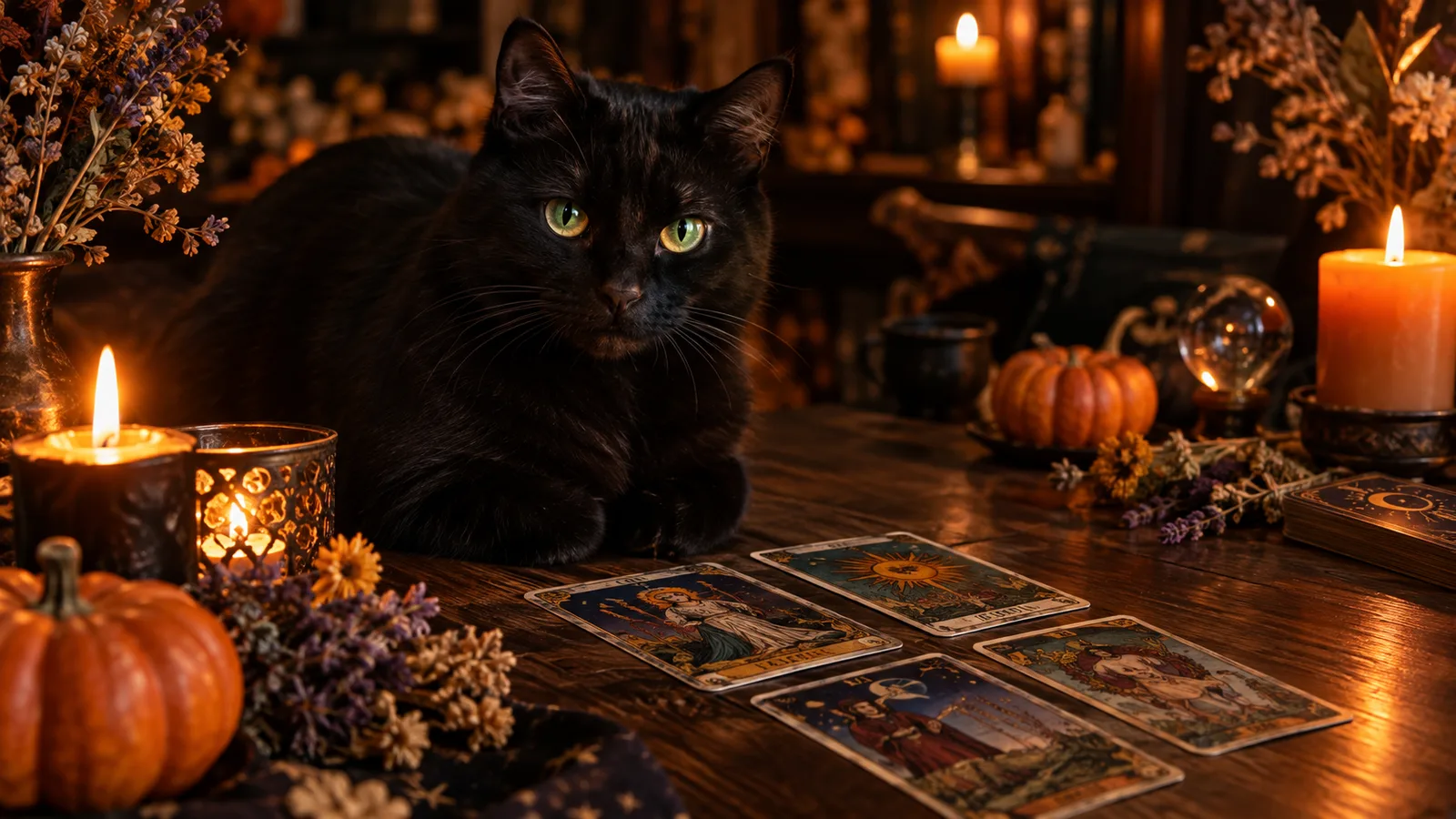
If you are building a Halloween reading station, add one non-tarot item that grounds the table: a bowl of candy, a mug, a small pumpkin, or a handwritten sign with the question. The object gives nervous guests something to do with their hands and makes the reading feel like a room rather than a performance.
Before and After the Reveal
Before the first shuffle, sort the deck into major and minor arcana. Check that every card is present and that the backs are not marked. A missing card is a distraction you do not need.
Shuffle in a way that suits the deck: overhand for stiff card stock, riffle for flexible stock, and a simple cut for a borrowed deck. Do not bend someone else's cards without asking.
After the season, store the deck with a piece of cedar or a dry lavender sachet. The ritual is practical: it keeps the cards dry and makes the deck feel like it belongs to a particular time of year.
Keep the Reading Grounded
Tarot Reveal keeps the experience lightweight: no account wall, no private birth data form, and no claim that a card replaces professional advice. Treat the reading as a reflective prompt, then bring your own judgment to anything important.
If you compare multiple pages, use the one that matches your intent instead of starting from the broadest keyword every time. A daily card, a random card, a three-card spread, and a card meaning guide each answer a different kind of question.
Keep brief notes if a reading feels useful, then return later and compare it with what actually changed in context.