How to Read This Page
A spooky tarot reading is a mood with a method. The mood comes from candlelight, fog, a dark table, and a card that seems to be looking back. The method is the same as any other reading: one clear question, one card or a small spread, and a short written response. If the mood overwhelms the method, you are watching a horror movie, not reading cards.
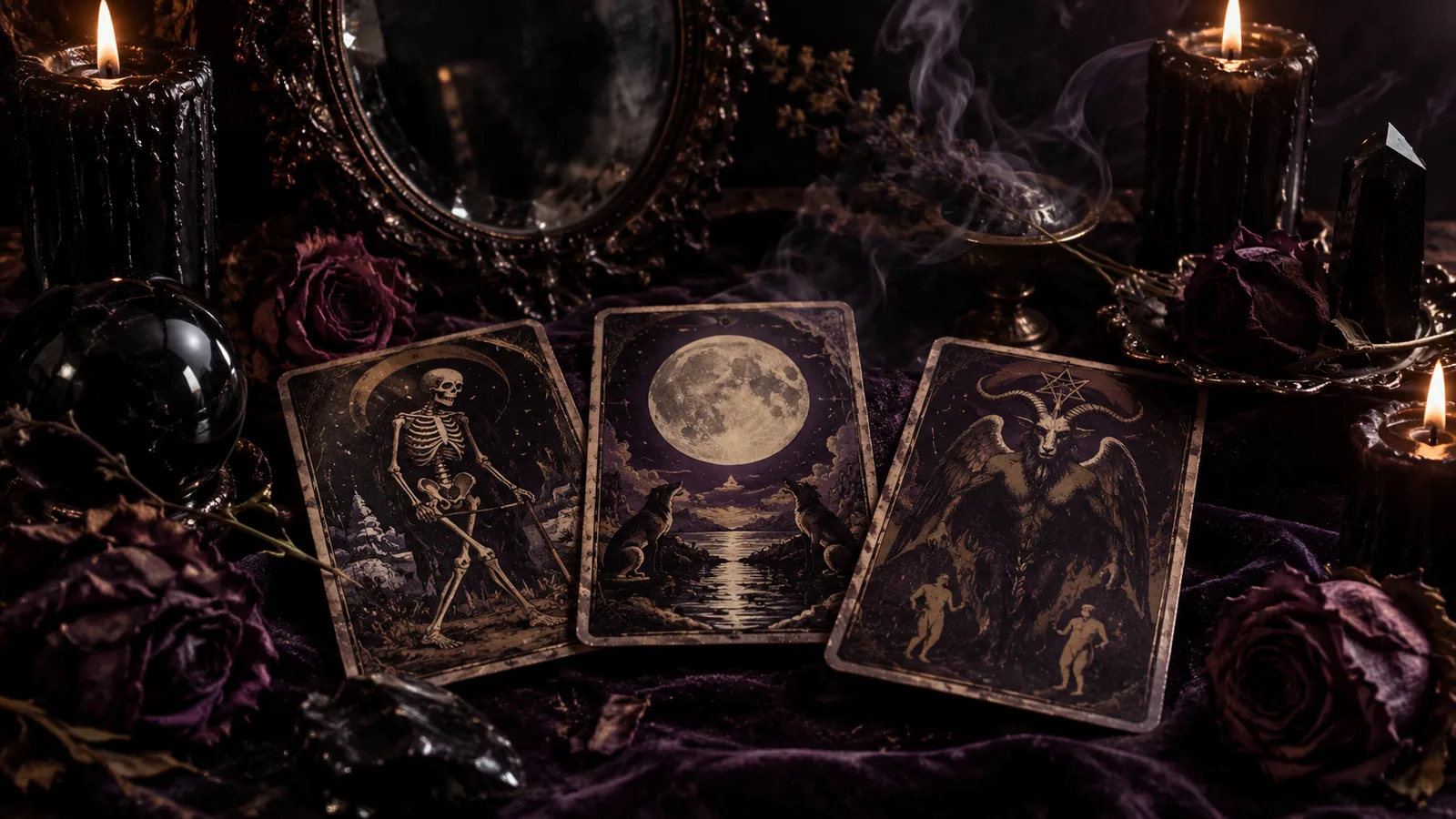
The most common mistake is treating a scary card as a threat. The Tower does not mean your house will fall down. It means a structure is under pressure. The Devil does not mean a literal demon; it means a bargain, attachment, or habit that has more power than it should. The Moon does not mean madness; it means the facts are not all visible yet.
If you are reading with friends, agree on a stop signal before you start. Keep other people's private lives out of the reading unless they brought the question themselves. A spooky party is not a license to reveal, tease, or diagnose.
The best ending for a spooky reading is ordinary: turn on a light, drink some water, write one sentence about what you noticed, and go do something else. The card will still be there tomorrow, and so will you.
Before and After the Reveal
Set the room before you draw: one candle, one card, and a chair you can leave easily. Put the rest of the deck out of reach so you are not tempted to keep drawing for a better answer.
Read the card out loud in the second person: "You are standing at..." Notice where the sentence makes you pause. That pause is the reading.
Close the session by naming one thing that is definitely real: the candle, the table, the weather, a person you can call. Grounding is part of the ritual, not an afterthought.
Keep the Reading Grounded
Tarot Reveal keeps the experience lightweight: no account wall, no private birth data form, and no claim that a card replaces professional advice. Treat the reading as a reflective prompt, then bring your own judgment to anything important.
If you compare multiple pages, use the one that matches your intent instead of starting from the broadest keyword every time. A daily card, a random card, a three-card spread, and a card meaning guide each answer a different kind of question.
Keep brief notes if a reading feels useful, then return later and compare it with what actually changed in context.